Amikon Limited factory
  • GE's new digital-to-analog conversion module DS200ADMAH1AAC is released, empowering industrial automation with precise control.
    GE's new digital-to-analog conversion module DS200ADMAH1AAC is released, empowering industrial automation with precise control. 2026-01-17
    GE's new digital-to-analog conversion module DS200ADMAH1AAC is released, empowering industrial automation with precise control. Recently, General Electric (GE), a giant in the field of industrial automation, has officially launched the upgraded version of Mark V series digital-to-analog conversion module DS200ADMAH1AAC. With its core advantages of high speed, multiple channels, and strong compatibility, provides more reliable signal processing solutions for key industrial scenarios such as gas turbine control and process automation, which has attracted widespread attention in the industry. As a core supporting component of the Fanuc RX3i PLC system, the launch of this module further improves the signal processing ecology of the industrial control system and helps enterprises achieve intelligent upgrading of equipment. Multidimensional technological breakthroughs, reconstructing the benchmark of signal processing accuracy DS200ADMAH1AAC takes analog-to-digital conversion technology as its core and a comprehensive upgrade in performance parameters. The module is equipped with 16 configurable input channels, supporting dual-mode input of voltage (-10V to  10V and current (0-20mA/4-20mA). The 16-bit high resolution ensures the accuracy of signal conversion, meeting the data acquisition needs various types of sensors in industrial scenarios. Its high-speed update rate of 10 microseconds per channel, which is 30% higher than the previous generation product, capture fast-changing industrial signals in real time, providing timely data support for dynamic process control. In order to cope with the interference challenges of complex industrial environments, the module is with programmable input filtering functions, which can effectively suppress electromagnetic noise. At the same time, through the electrical isolation design between the input channel and the PLC system, it the stability of signal transmission and the safe operation of equipment. In hardware design, the module is equipped with a green IMOK status indicator light and a red FAIL fault indicator light which realizes the visual monitoring of the operation status. Combined with the channel-level fault detection and reporting function, it greatly reduces the difficulty of operation and maintenance and improves the maintainability the system. Full-scene compatibility and adaptation, unlocking new possibilities for industrial control integration DS200ADMAH1AAC adopts a modular design, which be directly installed on the DS200DSPC digital signal processor control board. Through the VMEbus rack and density cable, it can be seamlessly connected with the DB input and output board, which is perfectly compatible with the GE Mark V Speedtronic system and various types of GE drivers and exciters. Its integrated programmable logic device static RAM logic control function achieve efficient communication between ADMA I/O and DSPC processor bus, supporting a variety of scenarios such as bridge control, dat...
    view more
  • Yokogawa NFLP121-S00 PROFIBUS-DP Communication Module: A Reliable Core for Industrial Automation Communication
    Yokogawa NFLP121-S00 PROFIBUS-DP Communication Module: A Reliable Core for Industrial Automation Communication 2026-01-09
    Introduction In industrial automation control systems, communication modules are crucial for ensuring efficient data transmission between devices and enabling collaborative system operation. The Yokogawa NFLP121-S00, a PROFIBUS-DP communication module specifically designed for industrial scenarios, has become a core component for interfacing Yokogawa's CENTUM VP, STARDOM, and other DCS systems with field PROFIBUS-DP devices, thanks to its stable transmission performance, broad compatibility, and adaptability to harsh environments. This module enables real-time data interaction between control units and field devices such as sensors and actuators, supports up to 12 PROFIBUS-DP slave stations, and features redundancy configuration capabilities. It provides reliable communication for process control and data acquisition scenarios, making it an important spare part for improving the stability and intelligence of industrial automation systems.   Technical Specifications The technical parameters of the Yokogawa NFLP121-S00 module have undergone rigorous testing in industrial environments. The core specifications are as follows: Manufacturer  Yokogawa Product Numbers  NFLP121-S00 Product Type  PROFIBUS-DP Communication Module Place of Origin  Japan Mounting Type  Plug-in module for FCN base Compatibility  FCN-100 / FCN-500 controllers Power Supply Voltage  5 V DC Maximum Current Consumption  700 mA Communication Protocol  PROFIBUS-DP (DP-V0 / DP-V1) Interface Type  RS-485 compliant Connector  D-Sub 9-pin female Transmission Rate  9.6 kbps to 12 Mbps Supported Devices  Up to 31 slaves without repeaters; 123 with Repeaters Indicators  RUN and COM LEDs for status and communication diagnostics Operating Temperature  0 °C to +55 °C Storage Temperature  −20 °C to +70 °C Humidity  5% to 95% RH (non-condensing) Protection Rating  IP20 (for cabinet installation)   Application Areas Relying on stable communication performance and broad compatibility, Yokogawa... The NFLP121-S00 module has been widely applied in several key industrial sectors: In the oil and gas industry, this module can connect to equipment such as pressure sensors and flow controllers in drilling platforms and refineries, enabling real-time data acquisition and precise control command issuance, ensuring stable operation of extraction and refining processes. In the chemical and power industries, its adaptability to harsh environments allows it to be used in high-temperature and high-humidity production workshops, supporting status monitoring and parameter adjustment of critical equipment such as boilers and reactors, contributing to safe production. Furthermore, in process industries such as steel smelting, papermaking and printing, and water treatment, this module can seamlessly integrate into existing DCS systems, enabling multi-device collaborative control and improving production efficiency and...
    view more
  • From Smart Sensing to Smart Automation — BAUMER Latest Development Hotspots and Technology Trends
    From Smart Sensing to Smart Automation — BAUMER Latest Development Hotspots and Technology Trends 2025-12-29
    As industrial automation enters Industry 4.0 and the era of smart manufacturing, sensors and encoders have evolved from simple data sources into intelligent edge devices. They not only provide precise signals but also support diagnostics, adaptive functions, and connectivity. As a global leader in sensor and positioning feedback technologies, BAUMER is driving industry evolution through innovative products and solutions, helping customers improve automation efficiency, reduce commissioning complexity, and enhance system reliability. 1. Smart Sensors: The Foundation of Automation With the growing demand for precise equipment control, condition monitoring, and remote diagnostics, smart sensors have become the core of industrial data acquisition. BAUMER’s latest sensors can detect distance, pressure, and object status in real time while providing fast response and stable output through embedded algorithms. Examples of BAUMER’s recent sensor innovations include: Ultrasonic and Time-of-Flight (ToF) sensors for high-dynamic object detection with minimal blind zones. Process sensors with IO-Link interface for richer data output and fast parameterization, improving overall connectivity and integration into smart automation systems. These advancements reflect a shift from passive data collection to active intelligent control in industrial environments. 2. Encoder Technology Evolution: High Precision, Smart Diagnostics, and Robustness Encoders, as core components for position and speed feedback in industrial actuators, are evolving from traditional single-pulse devices to intelligent, feature-rich, and network-ready solutions. Future encoder developments focus on: Precision signal processing and auto-calibration to ensure long-term accuracy. Bearingless or hybrid magnetic-optical designs to enhance durability and environmental adaptability. Functional safety and fieldbus integration for seamless industrial network compatibility. Encoders are no longer simple speed/position sensors; they have become intelligent feedback nodes that contribute to predictive maintenance, safety monitoring, and smart automation workflows. 3. Vision Systems and Multi-Sensor Fusion: Toward Collaboration and Quality Control BAUMER has significantly expanded its investment in industrial vision and multi-sensor solutions. Industrial-grade vision sensors enable real-time inspection, positioning, and automated condition adjustment. When combined with other sensor data, they provide real-time quality verification and advanced feature analysis. Multi-source sensor fusion enhances detection performance while laying the foundation for future machine learning and predictive maintenance applications, enabling smarter, self-adaptive production systems. 4. BAUMER HOG10DN1024I: Classic Encoder in the Era of Smart Automation In the context of intelligent automation, the HOG10DN1024I incremental encoder remains highly relevant while reflecting current industry trends: High Precision and Reliabil...
    view more
  • Bennett Nevada Proximity Sensor System All-inclusive Guide
    Bennett Nevada Proximity Sensor System All-inclusive Guide 2025-12-27
    Bently Nevada, a benchmark brand in the field of rotating machinery condition monitoring, has become the core equipment in industries such as power, petrochemical, and aerospace, with its high precision, high reliability, and full-scene adaptability. This article integrates its core product, technological innovation, industry applications, and operational specifications, creating an ultimate guide essential for industrial users. I. Core Product Matrix: Modular Solutions Covering All Working ConditionsThe Bently Nevada proximity sensor system, with the 3300 XL series as its core, has built a modular product family that adapts to different industrial scenarios. Each can be flexibly combined and exchanged, simplifying the selection and maintenance process: 3300 XL Basic Series: Containing four core specifications of 8mm, 1mm, 25mm, and 50mm, the linear range extends from 2mm to 27.9mm, meeting the vibration, displacement, speed measurement needs of everything from ordinary pumps to large steam turbines. The 8mm model complies with API 670 standards, suitable for sliding bearing machinery; the50mm model is designed specifically for large turbine differential expansion measurement, with a linear range of up to 27.9mm, leading the industry. Special Environment Custom: The 16mm high-temperature model withstands extreme environments of up to 260℃, with the sensitive element and signal processing part installed separately, suitable for high-temperature equipment; the NSv compact series uses a slim design, supports high-density DIN rail or panel mounting, and is tailored for equipment with limited installation space, as centrifugal air compressors and refrigeration compressors. Complementary Monitoring System: The 3500/42M four-channel monitor can synchron receive signals from four sensors, supports independent programming and threshold alarms, has a wide temperature operating range of -30℃ to  65℃, and adapts to the centralized needs of the power and petrochemical industries. Value-added Components: PROXPAC® XL integrated installation components simplify on-site deployment; ceramic cap probes enhance wear corrosion resistance, suitable for special medium environments; ClickLoc® plated brass self-locking connectors and TipLoc® molded probe technology enhance the system's resistance to vibration impact. II. Core Technological Advantages: Defining Industrial Monitoring Precision and Reliability Measurement Accuracy Benchmark: The entire series adopts eddy current sensing, with a linear error ≤ ±0.5% FS, and frequency response covering 0-8kHz, which can capture slight vibrations and displacement changes of the shaft system providing precise data support for fault early warning. The 330709 series 11mm sensor's linearity performance is particularly outstanding, becoming the preferred choice axial displacement monitoring of gas turbines. Extreme Environment Adaptation: The working temperature range covers -51℃ to 260℃, and some models have ATEX,...
    view more
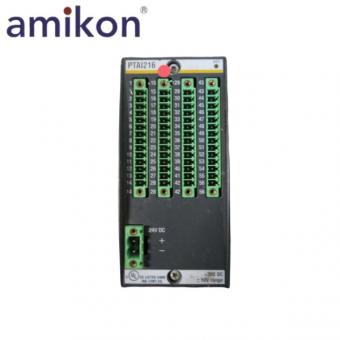
  • Yokogawa SAI143-S53 Analog Input Module: Precision Data Acquisition for Industrial
    Yokogawa SAI143-S53 Analog Input Module: Precision Data Acquisition for Industrial 2025-12-20
    Introduction In industrial automation, accurate analog signal acquisition is vital for process control. Yokogawa SAI143-S53 is a dedicated analog input module for Yokogawa DCS. It connects field sensors (temperature, pressure, flow, etc.) to upper controllers, converting analog signals to digital. It features strong anti-interference, wide signal compatibility and stable operation in harsh environments, meeting the precision requirements of industries where process accuracy impacts quality and safety. Technical Specifications Manufacturer: Yokogawa Product Numbers: SAI143-S53 Product Type: Analog Input Module Country of Origin: Japan Place of shipment: Xiamen, China Condition: 100% Original Warranty: 1 Year Number of input channels: 16 channels, module isolation Rated input range: 4 to 20 mA Permissible input range: 0 to 25 mA Input impedance during Power-OFF: 500 kΩ minimum Data update frequency: 40 ms Temperature drift: ±16 µA/10 °C Withstand voltage: 1.5 kV AC between input signal and system for 1 minute Application Fields The versatility and durability of the Yokogawa SAI143-S53 make it ideal for a wide range of industrial sectors, with targeted advantages in each scenario: 1. Petrochemical Industry: Used in refineries and chemical plants to collect pressure and temperature signals in corrosive, high-noise environments. Strong anti-interference ensures stable data transmission under pump/compressor EMI, ensuring safe production 2. Power Generation: Monitors key parameters of boilers, turbines and generators in thermal power and renewable energy plants, providing accurate data for load adjustment and fault diagnosis, reducing unplanned downtime 3. Pharmaceutical Industry: Complies with traceability requirements. High accuracy ensures full monitoring of temperature, humidity and other process parameters, helping meet GMP standards 4. Food and Beverage Industry: Monitors temperature and pressure in cooking, fermentation and packaging processes, ensuring compliance with food safety regulations, reducing product waste Core Advantages Compared with mainstream analog input modules, Yokogawa SAI143-S53 has the following advantages: - Higher Precision: ±0.1% FS accuracy, better than most modules (typical ±0.2% FS), capable of capturing subtle signal changes for precise control - Strong Isolation: Dual isolation (channel-channel + channel-ground) eliminates crosstalk and external interference, suitable for high-noise industrial environments where ordinary modules easily have data distortion - Wide Environmental Adaptability: -20°C ~ +60°C operating temperature covers most industrial conditions, no need for additional temperature control equipment, reducing deployment costs - Good DCS Compatibility: Original Yokogawa module, plug-and-play with Yokogawa DCS, no compatibility issues of third-party modules, simplifying configuration and reducing debugging time Installation and Optimization On-site installation and optimization suggestions for Yokogawa SAI1...
    view more
  • National Instruments PXIe‑8360: PXI Remote Control Module for Modular Test & Automation Systems
    National Instruments PXIe‑8360: PXI Remote Control Module for Modular Test & Automation Systems 2025-12-11
    Introduction The National Instruments PXIe‑8360 is a PXI Express remote control module designed to bridge PC‑based controllers with PXI or CompactPCI Express chassis using transparent MXI‑Express communication. Although discontinued, it remains widely used in modular test, measurement, and automation systems where reliable remote connectivity and control of PXI hardware is essential. Overview The PXIe‑8360 serves as a remote control interface, occupying a single PXI Express slot. It provides a high-speed link between a host PC and PXI/CompactPCI Express chassis using a PCI Express‑to‑PCI bridge and a copper MXI‑Express x1 cable, enabling the host computer to manage PXI hardware remotely with minimal configuration. Key Features Remote PXI & CompactPCI Control — Fully transparent communication between PC controllers and PXI Express systems via MXI‑Express. MXI‑Express x1 Interface — Handles control and data transfers using a PCIe‑to‑PCI bridge and MXI‑Express x1 connection. Single PXI Express Slot Footprint — Direct installation in a PXI chassis. Standardized Specification Compatibility — Compatible with PXI‑5 Express hardware specifications. Industrial Operating Environment — Designed for lab and industrial use with 0 °C to 55 °C operating temperature range and standard EMC and safety compliance. Technical Specifications Physical and Power Dimensions: ~10.0 cm × 16.0 cm (3.9 in × 6.3 in) Weight: ~0.17 kg (0.37 lbs) Power Requirements: +3.3 V rail at ~2.5–3 A typical; auxiliary rails for control logic Slot Requirement: One PXI Express slot Environmental Operating Temperature: 0 °C to 55 °C Relative Humidity: 10 % – 90 %, non‑condensing Storage Range: –40 °C to 71 °C Shock & Vibration: Tested per industrial standards The PXIe‑8360 is designed for stable operation in controlled lab and industrial environments. Typical Use Cases Modular Automated Test Systems (ATE) — Remote control for PXI-based instrumentation in production lines and test benches. Distributed Data Acquisition & Control — Connecting a central PC to PXI chassis over distances (up to 7 m) without compromising data integrity. Lab & R&D PXI Setups — Flexible control architectures where PXI chassis are physically separated from operator workstations. Compatibility and Integration PXIe‑8360 integrates seamlessly with: PCIe controllers or MXI‑Express PCIe interface cards PXI Express chassis compliant with PXI‑5 Express specification Windows and Linux host operating systems It works transparently within the NI software ecosystem, allowing plug‑and‑play integration without custom programming—ideal for modular automation and test platforms. Availability and Status The PXIe‑8360 is obsolete and no longer produced by NI. For long-term deployment, replacement or upgrade paths should be discussed with authorized NI distributors or system integrators. Legacy PXI infrastructures still rely on PXIe‑8360 for remote control and integration, and refurbished modules remain available th...
    view more
first page 1 2 3 4 5 6 7 8 9 10 last page

A total of 39 pages

welcome to Amikon Limited
If you have questions or suggestions,please leave us a message,we will reply you as soon as we can!

Home

Products

about

contact