I. Intensified Industry Competition: Leading Packaging Equipment Manufacturers Urgently Need to Build a Unified Digital Framework
The market demand for processing and packaging equipment in the food, medical device, and pharmaceutical industries continues to upgrade, with increasing customer-customized orders and rising product complexity. As a leading global supplier of processing and packaging solutions, MULTIVAC has long provided complete automated packaging production lines for the food, medical consumables, and pharmaceutical sectors, with business covering multiple countries worldwide. With the continuous expansion of its product line, pain points such as cross-departmental R&D collaboration, engineering data flow, and the disconnect between R&D and production information have gradually become prominent. Traditional decentralized data management models are insufficient to support long-term development strategies.
Equipment R&D involves collaborative work by engineers from multiple disciplines, including mechanical, electrical, and automation. Design drawings, bills of materials, process documents, and production tooling data are scattered across different systems, and information transmission relies on manual interaction, which is prone to information discrepancies. Simultaneously, the rapid iteration of customized models necessitates comprehensive data management capabilities covering the entire product lifecycle, establishing a seamless data link from R&D design to workshop production. Against this backdrop, establishing a unified digital pipeline and deploying a standardized product lifecycle management platform became the core breakthrough for Modivic's digital transformation. Faced with transformation needs, the company, after extensive selection, ultimately decided to rely on Siemens Xcelerator industrial software suite to implement its digital upgrade project.
II. Introducing the Teamcenter PLM System to Build the Core Foundation of the Enterprise's Digital Pipeline
On July 24, 2026, Siemens officially announced the cooperation, with Modivic selecting Siemens Teamcenter software as its strategic PLM core platform, building a company-wide digital pipeline based on the Siemens Xcelerator industrial software ecosystem. This system will undertake the unified management of data for all product categories, connect multidisciplinary engineering R&D teams, link downstream manufacturing processes, and reconstruct the digital processes of product R&D and full lifecycle management.
The primary goal of Teamcenter, as the backbone platform of this digital pipeline, is to achieve comprehensive digitalization and integrated integration of the product development process. After the platform's implementation, the transparency of information throughout the R&D process has been significantly improved, the barriers to cross-team collaboration among engineers have been greatly reduced, and operational efficiency has been continuously optimized. Faced with increasingly complex customized packaging equipment products, the system can cover the entire lifecycle of data management, from conceptual design, detailed engineering design, process planning to post-delivery data management, effectively addressing the management challenges brought about by the continuous increase in product complexity.
Dr. Christian Lau, Chief Technology Officer and Group President of Modivic, stated that with the Teamcenter platform, the company can continuously improve employee productivity and cross-team collaboration. A unified data foundation will drive the transformation of existing processes towards a data-driven model, fully preparing for the subsequent integration of artificial intelligence engineering tools and data analytics applications. A coherent and unified digital framework establishes the foundation for an integrated product development process and also reserves expansion space for the company to continuously advance various digital projects.
III. Breaking Down Data Barriers in R&D and Manufacturing, Activating Existing Siemens Digital Tool Assets
Modivic is not using Siemens digital solutions for the first time. Prior to this, the company had already implemented several Siemens industrial software programs, including Designcenter Manufacturing for production tooling management and Teamcenter Manufacturing Resource Library. This comprehensive deployment of Teamcenter as the central PLM backbone system integrates previously scattered software tools, bridging engineering R&D data with workshop manufacturing processes to achieve a unified digital operation model for R&D and manufacturing.
In addition to coordinating R&D data, Modivic also leverages Siemens software to manage CNC workshop operations, achieving digital management of tooling and will further expand to include unified NC program control. Integrating workshop CNC capabilities into the overall enterprise digital framework ensures consistent manufacturing data, reduces data entry errors, shortens production line debugging and changeover time, and comprehensively improves factory operational efficiency.
End-to-end data exchange between R&D and production workshops ensures real-time synchronization of all changes, allowing management to clearly understand the dynamics of product development, process adjustments, and on-site production. This transparent data link enables more flexible and agile production scheduling, stably ensuring the manufacturing quality of packaging equipment and adapting to a mixed production model of large-volume standardized equipment and small-volume customized models.
IV. PLM Platforms Empower the Equipment Manufacturing Industry, Unlocking the Long-Term Value of Digital Transformation
Industrial machinery and equipment manufacturers currently face multiple operational pressures: increased complexity due to product customization, faster market iteration, and information gaps between R&D and manufacturing. Many equipment companies have years of production experience but lack a unified data platform. R&D drawings and process plans cannot be efficiently disseminated to the workshop, and delays in engineering change communication can easily lead to production waste and delivery delays.
Klaus Löckel, Managing Director of Siemens Digital Industries Software (DACH), pointed out that the collaboration between Modivike and Siemens fully demonstrates that a highly scalable PLM platform can help manufacturing companies build a solid digital foundation and continuously support their medium- and long-term digital transformation plans. Siemens' Xcelerator open industrial software ecosystem covers multiple modules including R&D simulation, process planning, production execution, and equipment maintenance. It can expand its functions step-by-step according to the company's development stage, without requiring a large-scale replacement of existing information systems, adapting to the transformation pace of most equipment manufacturing companies.
For equipment manufacturing companies with strong non-standard attributes, such as packaging equipment and automated production lines, the value of digitalization lies in long-term operation. A unified PLM platform can accumulate years of R&D knowledge assets for enterprises, enabling experience reuse, shortening new product development cycles, improving customized project delivery capabilities, and helping enterprises establish a differentiated advantage in global market competition.
V. The Wave of Digital Upgrading of Automated Equipment: Continued Opportunities for Industry Cooperation
Modivic's implementation of the Teamcenter PLM project is a typical example of digital transformation in the high-end packaging equipment industry. Looking at the global automated equipment market, more and more manufacturers are abandoning fragmented digital tools and shifting towards building a data pipeline that spans the entire lifecycle. From product development, process planning, parts procurement, and complete machine assembly to after-sales maintenance, a complete data chain is the core foundation for high-end equipment enterprises to achieve quality improvement, efficiency enhancement, and continuous innovation.
Siemens' Xcelerator software ecosystem, with its comprehensive matrix of PLM, MES, and simulation software, continues to attract attention from global equipment manufacturing enterprises. With the continuous advancement of intelligent manufacturing, the integration of R&D and production, data-driven engineering, and AI-assisted design will become the mainstream development direction of the industry. Many manufacturing enterprises are seeking mature and scalable digital solutions to break down internal information silos and unlock the value of digital assets.
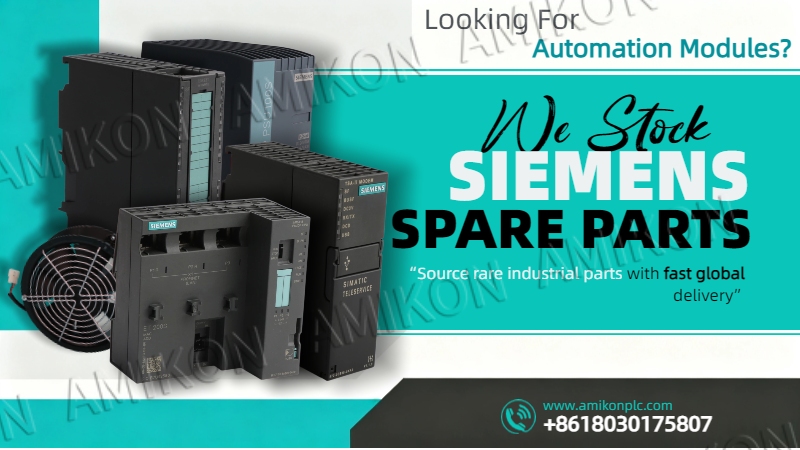
The demand for trade and project matching of various software and hardware solutions, spare parts, and digital systems in the industrial automation field continues to grow. If you are interested in learning about Siemens' industrial automation supporting product solutions, please feel free to contact us.
Manager: Leonia
Conclusion
Modivic's collaboration with Siemens Xcelerator and the deployment of Teamcenter to build a digital pipeline marks a new stage in integrated digital R&D for the world's leading high-end packaging equipment manufacturer. Relying on a unified PLM platform, the company successfully connected R&D and manufacturing data channels, integrated existing digital tools, and built a sustainable and iterative digital foundation. This collaborative case also provides a clear reference path for many non-standard equipment and automated production line manufacturers: prioritize building a coherent data pipeline, gradually promote digital transformation, fully explore the value of data, and confidently address the challenges brought by product complexity and rapid market iteration. In the long run, the digital pipeline will continue to empower product innovation, optimize production processes, and help manufacturing companies solidify their global market competitiveness.
Recommended Products
|
ETVDL21-04-I06
|
SR2000
|
R700009914 S50FI
|
|
MCPT410
|
SPIRAX SARCO BRV2S 0457400
|
B157AAEX01 H147AASX01
|
|
ABB ROBOTICS DSQC539 3HAC14265-1
|
ABB 57619104E NGDR-03C 61353364D
|
SIEMENS 6EP1437-3BA00
|
|
FW10AE81 9017033 BS 8AE8
|
ABB TTH300-E1
|
5.3106 PN16 345365 149G010909
|
|
5816250030DSC12WE12MM
|
VIDEOJET 378997-102-AA
|
052002104
|
|
B&R 2DI425.6
|
FESTO SLS-16-15-P-A
|
2E2W-00400-022/0135707
|
|
UD71
|
FESTO 184512 MEBH-5/3G-D-3-ZSR-C
|
207057 WTS10-12-4016/103/105 WTS10124016103105
|
|
SR1000
|
CPU1
|
BTS107,51524RL724 27167EB
|
|
ABB DSQC331 3HAB7215-1 3HAB72151 1430.0116-001 14300116001
|
BN624A864H01 86425-01290.8.22A
|
MC07A0225A3410 8272964
|
|
KRS9
|
DM152Q 825-10315-1R
|
426 4500 27S12-03 376 846-S0
|
|
XGK-S130421
|
400-005 179680315 PMS400-005
|
ATV58HU29N4
|
|
MOOG DYX-C161041-00-A01 GSH-A0-00-07 50-501H SER.E2012 DYX-C161044-00-A01
|
VIB53XRGAANHK 893204/001
|
6SL32105BB155UV1
|
|
GVMAXSP345V3
|
FLC3003
|
1F10805A2000000
|
|
1000 1045-4190 VRFCF12048DCG 1045-3288
|
6MD10310AA00
|
DR62.0X80-2/ASTO + PLG 52 88851 0176
|
|
HAVER & BOECKER 2.900.1187.04 200324777
|
E82EV7512C
|
34HD3401-02
|
|
MOELLER ZWA-25 6,3-25A ZWA25
|
C40S0901AA310
|
PS421 89421-0-1420000-300-403-600-705-706
|
|
ATLAS COPCO 4220098207 4220 0982 07
|
179680315 PMS400-005
|
FTI55-AAA1RV132A1A
|
|
SENSOREX ALPHA 4000 690042891G
|
VIB53.XRGAANHK VIB53XRGAANHK 893204/001
|
7EB2431-2AB 56875430
|
|
HFUS-17-80-2A-GR-SP
|
VS1 GPO12V-12A11/3
|
6AV35151MA221AA0
|