Introduction
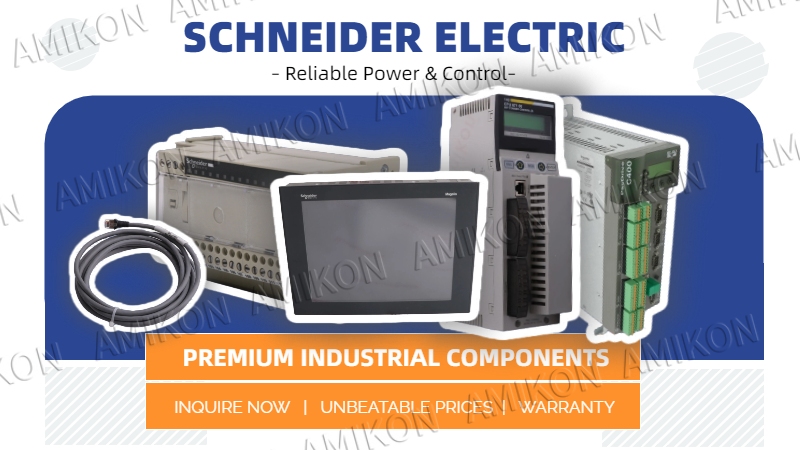
Currently, China's manufacturing industry is in a stage of deep integration between cyclical recovery and structural transformation. Traditional industries are accelerating their high-end upgrades, while emerging sectors are flourishing under the empowerment of new technologies such as AI. The cultivation of new quality productivity has become a core issue for industry development. As a global leader in energy technology, Schneider Electric has always been deeply rooted in the Chinese market. Based on a deep localization strategy, driven by agile innovation, and using pragmatic digital and intelligent solutions as a vehicle, it accurately targets the opportunities for manufacturing transformation, resonates with local enterprises, and jointly draws a new blueprint for intelligent manufacturing development. Recently, Cui Zhida, Vice President of Schneider Electric and Head of Industrial Automation OEM Business, shared Schneider Electric's thoughts and practices on deeply cultivating China's manufacturing industry in an exclusive interview, focusing on core topics such as localization layout, AI technology implementation, and industry ecosystem construction.
Deeply Rooted in the Local Market: Forging Agile Response Through Integrated R&D, Production, and Sales
Localization is Schneider Electric's core strategy for establishing itself in the Chinese market, and the Industrial Automation China Hub (IA China Hub) has become a key vehicle for the implementation of this strategy. Since its establishment in 2022, the center has broken down the barriers between traditional R&D and the market through an integrated R&D, production, and sales model. It deeply integrates R&D, sales, and application teams, ensuring that technological development truly meets the real needs of local customers.
Previously, Schneider Electric's product development relied heavily on its global system. Transmitting personalized needs to the Chinese market required cross-regional communication, which was time-consuming and inefficient. Now, R&D engineers can work alongside frontline teams to delve into customer sites, identifying pain points in application scenarios immediately, minimizing information transmission errors, and significantly accelerating the implementation of customized solutions. For example, in the data center field, Schneider Electric, through the center's rapid response mechanism, completed prototype development in just one and a half months to meet specific customer functional requirements. This agile model is gradually being replicated in more fields such as textile machinery, packaging machinery, robotics, and low-altitude economy, providing comprehensive support from hardware to algorithms for the development of new models for customers in various industries.
Dual-Engine Strategy: Strengthening Core Businesses and Seizing New Transformation Opportunities
In the ever-evolving competitive landscape of the domestic market, the fierce competition in China's OEM sector has long since shifted from simple price wars to comprehensive value competition. Domestic companies are accelerating their transformation in three key areas: high-end equipment, diversified business models, and global market expansion. In response, Schneider Electric has accurately grasped market trends and adhered to a dual-engine strategy of "strengthening and upgrading traditional industries while seizing opportunities in emerging sectors."
On the one hand, traditional industries such as packaging, textiles, HVAC, plastics, and printing account for over 70% of China's manufacturing sector, forming the foundation of the OEM market. Schneider Electric focuses on empowering the entire equipment lifecycle, deeply integrating automation hardware, advanced control technology, and AI algorithms to help traditional equipment escape the low-value-added predicament and transform towards high-end and intelligent manufacturing, driving local enterprises to leap from "manufacturing" to "intelligent manufacturing." On the other hand, in emerging fields such as data centers, robotics, and the low-altitude economy, Chinese and foreign companies are essentially on the same starting line. Schneider Electric, with its complete solutions for automation, digitalization, and intelligence, helps customers build differentiated core competitiveness, seize the development dividends brought by new quality productivity and the "15th Five-Year Plan," and jointly explore new growth opportunities.
Pragmatic AI: Rooted in Scenario Empowerment, Rejecting Formalistic Implementation
Faced with the surge in industrial AI, Schneider Electric has always maintained a rational and pragmatic attitude, emphasizing that technology implementation must be rooted in process scenarios and create real value, resolutely avoiding formalistic applications of "AI for AI's sake." In its AI strategy, Schneider Electric clearly divides its approach into two main directions: mature implementation and cutting-edge exploration, ensuring that technology truly serves the high-quality development of industry.
At the mature application level, technologies such as visual recognition, predictive maintenance, advanced control, process optimization, and data center air conditioning energy efficiency optimization have been widely implemented in their own production scenarios. Taking the Shanghai Putuo factory as an example, by integrating AI, 5G, and AR technologies into the entire process of product prototype design, flexible production, intelligent scheduling, supply chain management, and equipment operation and maintenance, the factory's per capita production efficiency has increased by 82%, becoming a benchmark case for the implementation of industrial AI. At the cutting-edge exploration level, Schneider Electric China AI Innovation Lab continues to deeply cultivate the research and development of generative AI and industrial small models. On the one hand, it uses AI technology to improve the efficiency and market adaptability of new product development and shorten the product cycle from R&D to implementation. On the other hand, it focuses on the core pain points of manufacturing such as equipment optimization, energy consumption management, and production optimization, refining scenario-based and implementable solutions, making AI technology a true "accelerator" for industrial upgrading.
Anchoring Value: In sync with Made in China, Moving Towards a Long-Term Future
In the first quarter of 2026, although fluctuations in raw material prices and changes in the international situation brought some uncertainty to the development of the manufacturing industry, the overall market showed a cautiously optimistic trend, and the long-term upward development trend of China's manufacturing industry has never changed. "Sailing against the current, if you don't advance, you fall behind," Cui Zhida used this phrase to describe the current competitive landscape, and Schneider Electric's strategy for breaking through this predicament has always revolved around the core of "customer value."
Whether it's the equipment upgrade needs of local enterprises, their global expansion, or the uncertainties of exploring new markets, Schneider Electric leverages the agility of its Industrial Automation China Center and its digital intelligence capabilities to provide customers with customized, end-to-end solutions. When customers need to upgrade equipment, Schneider Electric provides technical and solution support; when customers want to expand overseas, it shares its global operational experience and lessons learned; when customers want to enter new markets, it helps them find a differentiated competitive path.
Having been rooted in the Chinese market for many years, Schneider Electric has deeply integrated its own development with the transformation of China's manufacturing industry. In the future, Schneider Electric will continue to deepen its localization strategy, continuously improve the integrated R&D, production, and sales capabilities of its Industrial Automation China Center, strengthen ecosystem construction, and unite all parties in the industry chain to jointly address the needs of emerging application scenarios. At the same time, it will take a more pragmatic approach to promoting the implementation of industrial AI technology, enabling digital intelligence technologies to empower more industries and more enterprises. By leveraging localized agile innovation to forge market responsiveness, empowering high-quality industrial development with digital technologies, and uniting industry forces through an open ecosystem, Schneider Electric will continue to work with Chinese manufacturing partners to seize development opportunities amidst the waves of cyclical recovery and structural transformation, and jointly move towards a new future of intelligent manufacturing.
More Products
|
BTL-5-A11-M0127-R-SU071-S32 18005438390 |
HT-PD 3403-15-C3 |
COGNEX 825-0046-1RF |
|
V20 CN32 |
FLT 35 CTRL-1.5 2816894 |
SICK VSPI-1R111 |
|
S41 AA04 |
JANCD-1006 REV.C 0 DF803500-C0 |
F920GOTBBD5KE |
|
M12-6H |
AW01 |
PSI-MOS-RS232/FO 850 E 2708371 |
|
B&R MCMAEB-1 |
24 BK-LK |
MURR 86309 MST 1-PHASE |
|
ABB 07DC92 GJR5252200R3101 |
EPIS 8535-00.500 |
KEYENCE IV-G10 |
|
ECE1611 |
TRUMPF INV3 18-22-05-A1001/01 |
SIEMENS 470-7LB11 6ES5470-7LB11 |
|
DIS82.AXXKIMACX |
BURKERT 00178681 |
421615134C |
|
198845B-01L |
GROSCHOPP 200-4/8-4Q-S |
TSXASZ401 |
|
CPX-FVDA-P2 1971599 |
TSXASZ200 |
SIEMENS 6ES5900-7AC21 + 6ES5910-0AA41 |
|
420 500 01 -03 385 428-16 |
C2MT-01834BBC03BE0 |
R3D425001 E1145 |
|
CPX-F8DE-P 2597424 |
KUBLER 8.5020.0050.0100.S110.0100 19651049 |
MLO4 TM56882000 |
|
PAD8 1012 |
LMD400 700202/2,000-01-04-23-000 |
TM55607001 |
|
R2AD06040FXH11M |
N4/12,5-53 JMK30N412553 |
BEIJER E100 03210 |
|
514218 |
XS262 85061 |
ECZ0810 |
|
EMZ9372BB 00410875 960264 |
BAE00KR BAE LX-VS-HI050 |
SICK DT35-B15851 1057653 |
|
VBA1-2 |
DPZ2050PA |
TGR3002-05-T-DS-100 |
|
SECO1D |
ROD4200010720 23848504 |
ELESTA STM042M04 151 909 151909 |
|
OTC4000000 1017866 |
OP45S00ST |
HEIDENHAIN ROD 426 E 1250 ROD 426 E 1250 244 563 15 24456315 |
|
PCS8010 |
MSR117T 440R-B23211 |
B&R A244 ECA244-0 |
|
EIL580-TN14.7FN.0500.A 11197405 |
440RZBE820AZ1A |
B&R E243 ECE243-1 |
|
AVENTICS 0822398209 |
PEPPERL + FUCHS 47539 85-12321_R-785 047539 |
LEUZE FRK 95-44-350 L 50034515 |
|
BMH10-0111 |
ABB 61352571E NINT-41C |
ALLEN BRADLEY 1203-GK2 DF1/DH485 |
|
19BID 48H 1301-2R |
XCC-1510PS11Y |
SIEMENS 521-1BL10-0AA0 |
|
19BID |
BECKHOFF EL6751 |
SRT2-0D16T-1 |
|
QT40.241 |
PULNIX RM-1402CL 000217 |
RSP02 58-13+12-3-B-W1-DS-F2 |
|
CI-150-475-LU |
PILZ 750106 |
BOD66MLA04S92C |
|
C-329-05 0421 |
MT-A310 |
PN9020 0-400BAR |
|
8719-5225 |
1442427-00-GR |
ROD4260003900 |
|
XAREM2 |
1278 383 965-02 |
750-459 4AI |
Manager: Leonia | Email:sales11@amikon.cn | Whatsapp: +8618030175807
New Blog
Supplyed
525011

parts to
23253

customers in
148

countries



Disclaimer:
Amikon sells new and surplus products and develops channels for purchasing such products. This website has not been approved or recognized by any of the listed manufacturers or trademarks.
Amikon is not an authorized distributor, dealer, or representative of the products displayed on this website. All product names, trademarks, brands, and logos used on this website are the property of their respective owners. The description, explanation, or sale of products with these names, trademarks, brands, and logos is for identification purposes only and is not intended to indicate any association with or authorization from any rights holder.
Powered by amikonplc.com