Today, the convergence of AI, big data, and the Internet of Things is accelerating the digital transformation of various industries worldwide, fundamentally rewriting the way modern industry operates. This change is particularly urgent in critical sectors such as energy, water, and telecommunications. The rapid growth in the scale and complexity of remote operations is making it increasingly difficult for traditional SCADA systems to handle various problems: managing assets scattered in different locations, dealing with massive amounts of data from all directions, and responding to alarms in real time. Their shortcomings in flexibility and scalability are becoming increasingly apparent. Faced with the new demands of the digital age, outdated systems are facing survival pressures. Software-defined SCADA is beginning to emerge, becoming a transformative force in the field of remote operations management.
Software-Defined SCADA: A Solid Foundation for Industrial Digital Transformation
As the core of industrial control systems, SCADA is responsible for real-time data acquisition, monitoring, and control of field devices and processes. It supports configuration through specialized programming software, with some operations enabled by offline tools and editors, and others supporting online real-time configuration. Interfaces often use intuitive methods such as form-based data entry and graphical click-and-click actions, helping users efficiently design interfaces and deploy functions.
Schneider Electric and its subsidiary AVEVA jointly developed SCADA software that incorporates an application programming interface (API), providing technical support for dynamic SCADA configuration. Furthermore, through deep integration with Python functionality, business processes have been completely revolutionized, with all operational steps automated, paving a critical path for the implementation of software-defined SCADA.real-time configuration modification, upgrades can be performed in 24/7 operational environments, removing downtime risks and ensuring the continuous stability of critical infrastructure.
Flexible Scalability to Meet Dynamic Needs: Scalability is a core advantage of software-defined SCADA. By deploying configuration templates, enterprises can efficiently configure large numbers of devices, accelerating upgrades and changes to meet dynamic demands such as business expansion and technology iterations. Its integrated functions simplify the entire configuration, operation, and management process, while the scalable architecture allows millions of signals to be monitored with just a few servers – achieving both flexible adaptation and cost control, thereby lowering total cost of ownership.

Intelligent Operations for Better Decision-Making: Purpose-built for managing geographically dispersed assets, EcoStruxure Geo SCADA Expert integrates high-performance graphics, geovisualization, historical data analysis, and intelligent alerting. Its real-time intelligent data analysis significantly reduces monitoring response times. Smart alerts automatically identify anomalies and prioritize warnings by severity, helping operations teams address issues quickly, minimize downtime, and enable data-driven decisions that improve operational efficiency and system reliability.
Process Optimization to Reduce Costs and Increase Efficiency: With continuous iteration and upgrades, the latest version of EcoStruxure Geo SCADA Expert adds several core features that further streamline processes and optimize costs. Deeply integrated native Python capabilities redefine HMI and system management, automating key tasks such as configuration generation, data processing, and cross-system communication – significantly reducing operational burdens while ensuring standardized operations. API interfaces automate configuration management, external system integration, and database connectivity, further reducing manual intervention and operational risks, driving lean operations and quality improvement through digital intelligence.
Industry Practice: Realizing Value and Empowering Global Operations with Software-Defined SCADA
Software-defined SCADA acts as the "neural network" of modern industry, enabling real-time perception, precise dispatch, and coordinated control of a vast number of terminal devices and critical facilities. It has already been successfully deployed in key sectors such as petrochemicals and water, with its technical advantages and business value fully validated. It continues to expand into broader fields including energy, manufacturing, and infrastructure, offering practical paths to digital transformation for diverse industries.
At a major Chinese petrochemical group’s integrated refining and petrochemical project and crude oil storage and pipeline facility, the core challenge was integrating multiple departmental systems into unified management and control. Schneider Electric built an integrated pipeline control system based on the Geo SCADA platform, deeply integrating DCS smart junction boxes (SJB) and Triconex safety smart junction boxes (SIE) to create an intelligent, adaptable, and flexible solution. The results were significant: unified management and data connectivity across depots, pipelines, and valve stations, lower costs in installation, construction, commissioning, and startup, and an overall CAPEX reduction of approximately 40%.
In Italy, a water service provider operating over 1,000 aqueducts, wastewater treatment plants, and purification facilities faced challenges from fragmented systems, high water losses, and inefficient control. It needed to integrate disparate remote control systems into a unified SCADA platform, build a central control room for efficient site-wide operations, and implement active water loss prevention through accurate hydraulic modeling. Schneider Electric provided a comprehensive solution based on the EcoStruxure platform. Using specialized integration software and industry expertise, the provider achieved full optimization of water management, ERP integration, and remote monitoring – resulting in a 5% reduction in energy consumption, a 20% drop in operating costs, and a 10% decrease in water losses.
In the UK, Anglian Water sought to maintain industry leadership in leakage control and water resource protection while addressing pressing challenges such as rapid leak detection, cost reduction, and regulatory compliance. With Schneider Electric’s EcoStruxure Geo SCADA Expert and water management suite, the customer improved operational decision-making, strengthened water loss management, and boosted operational efficiency. The project connected over 630,000 monitoring points, achieved one of the lowest leakage levels in the UK, reduced water losses by 10%, and increased operational efficiency by 10%.
In Australia, WaterForce faced challenges including remote and isolated critical assets, tightening regulatory requirements, and the need for greater visibility into system status and performance. Schneider Electric provided intelligent, sustainable irrigation and water management solutions, including EcoStruxure Geo SCADA Expert, creating a comprehensive view of key irrigation assets. This significantly improved water use efficiency, drastically reduced management time, and – through the SCADA Farm application – lowered overall irrigation-related costs by 50%, setting a benchmark for smart water management and efficient irrigation.
As industry accelerates toward a data-driven future, "software-defined" approaches continue to drive innovation in SCADA applications. Platforms like EcoStruxure Geo SCADA Expert are not only efficient tools for modern IT environments but also establish a new paradigm for intelligent OT operations. Looking ahead, Schneider Electric will continue to harness innovation, leveraging industry-leading technologies, products, solutions, and broader ecosystem collaboration to strengthen remote operations and intelligent management capabilities for customers worldwide. In doing so, it helps enterprises solidify their digital foundations and evolve nimbly amid the waves of digital transformation, injecting certainty into the high-quality development of industries.
Recommended Products
|
1000 Ref. 80-1569 |
18345-1010221001 |
ACE-T140A-RS |
|
MSMZ022AAA |
18345-1010421001 |
PC1200 |
|
AC09-RX |
18345-1010251001 |
C-BUS E5100PS |
|
FA AC09-RX AC09RX |
CLS50-A1B6 |
TIS 150-148 |
|
LX42C4-CM |
177230-02-01-CN |
SMC XSA1-22V NC XSA XSA122V |
|
862-02A61007A00/03 |
CM442-3PQ7/0 |
CLG-72A0025 |
|
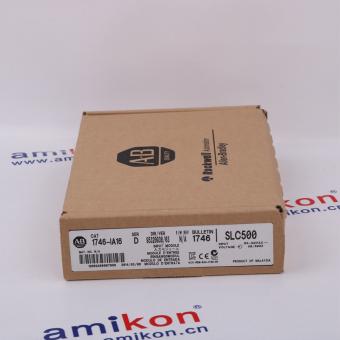
1746-IA16 C SLC 500 |
CPM253-MR8010 |
MVI56 F/W |
|
H32NRFA-LNN-NS-00 |
CPS11D-7BA2G |
FVUS011-NA VKMH07W |
|
E5034NS 63158 13201 C |
CPM223-MR0005 |
E21NRFT-JDN-NS-02 |
|
HV/LCDBL/B/A01 33002376 |
190501-00-00 |
EKI-2525 5- EKI2525 |
|
IMCAE024DA3C |
FMU30-AAHEAAGGF |
SGDS-02A01A |
|
ASM 12-F18882-01 |
MR-J2S-10A |
11008-525 ICL 8/12A |
|
AC121SA01 |
0053-1 1K |
NVC-946 CCD |
|
YH-182AH |
PHARPSPEP21013 |
0190-54811 |
|
D20493/VAR6 |
PHARPS03000000 |
ASM 12-F18667 EFEM LP4 |
|
D20492/ISS6 |
PHARPS40000000 |
ASM 12-F18666 EFEM LP3 |
|
BELIMO LMC230A |
SPS03-5V |
EMP MW-700ET AC |
|
M4T32-BR12SH1 |
2VAA008280R001 |
ASM 12-E86154 |
|
WGA-100A |
Knick 8001 . 461196 |
CKD AGD12V-8R 5X313-07178 |
|
FN351H-36-33 EMC / EMI |
IKO BWU 60-100 |
NP1Y32U09P1 |
Contact Us
Manager: Jim Pei
Email:sales6@amikon.cn
Whatsapp:+8618020776782
New Blog
Supplyed
525011

parts to
23253

customers in
148

countries



Disclaimer:
Amikon sells new and surplus products and develops channels for purchasing such products. This website has not been approved or recognized by any of the listed manufacturers or trademarks.
Amikon is not an authorized distributor, dealer, or representative of the products displayed on this website. All product names, trademarks, brands, and logos used on this website are the property of their respective owners. The description, explanation, or sale of products with these names, trademarks, brands, and logos is for identification purposes only and is not intended to indicate any association with or authorization from any rights holder.
Powered by amikonplc.com